Sourcing wooden frames for large orders is difficult. Real wood is expensive and quality is inconsistent. This can hurt your budget and your brand's reputation with every flawed frame.
For large-scale orders, choose MDF (Medium-Density Fiberboard) wooden frames. They offer the classic look of wood with superior consistency and cost-effectiveness. A manufacturer with FSC certification ensures your frames are also sustainable and market-compliant, meeting both budget and quality demands.

As a purchasing manager for a large brand, you need a product that looks great but can be produced by the tens of thousands without issues. I've spent over a decade guiding clients through this exact challenge. The term "wooden frame" can be misleading. The choice between solid wood and engineered wood like MDF is one of the most critical decisions you'll make. It impacts your cost, your product's final look, and even its ability to be sold in certain markets. Let’s break down how to make the right choice for your business.
Is Solid Wood or MDF Better for Bulk Orders?
You want the premium feel of solid wood for your brand. But the high cost and potential for defects are huge risks for large orders, threatening your budget and timelines.
MDF is almost always better for bulk orders. It provides a flawless, consistent surface ideal for painting or wrapping, at a fraction of the cost of solid wood. Solid wood is better reserved for high-end, smaller-batch premium products where budget is not the primary concern.
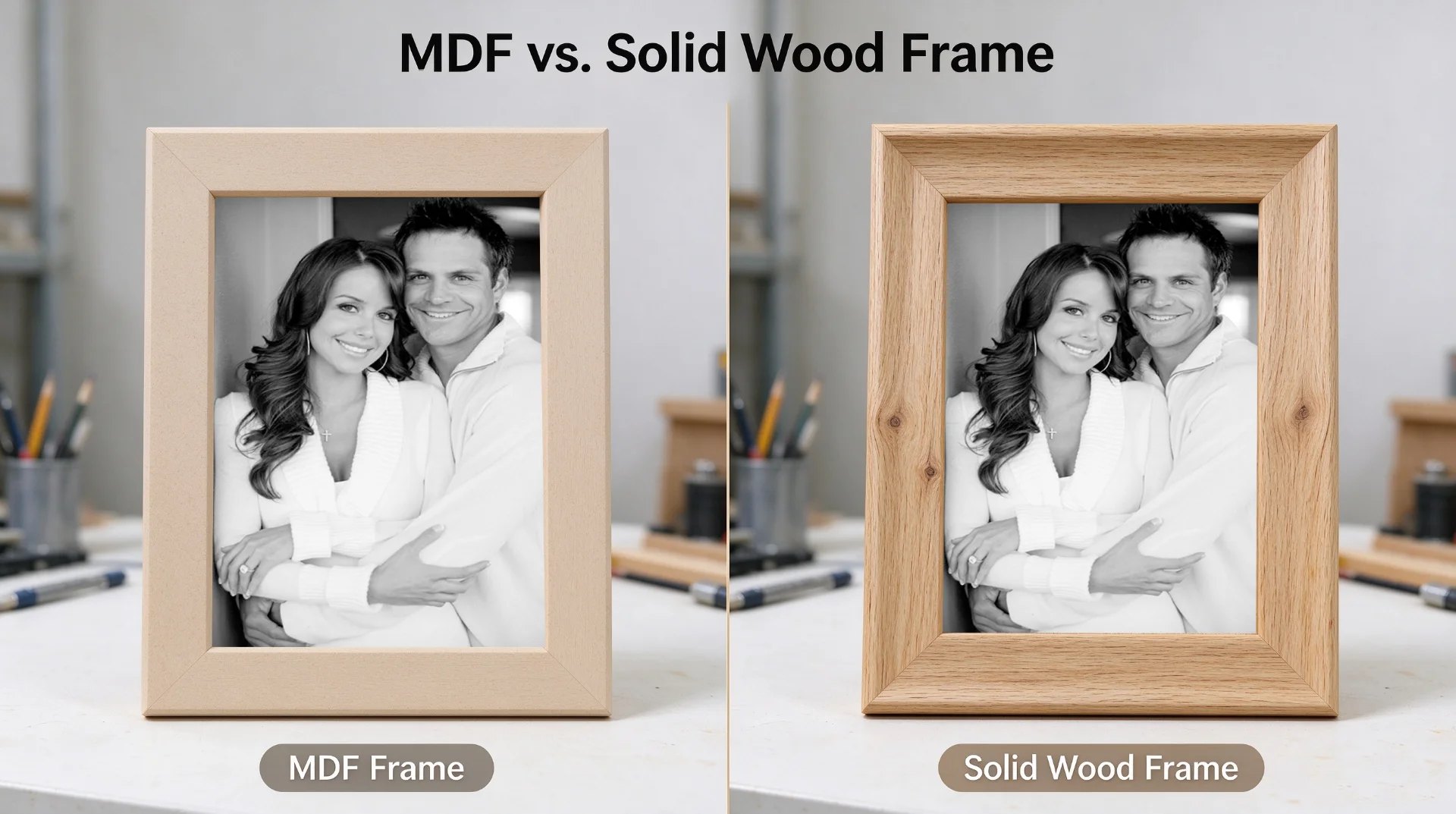
The romance of "solid wood" is strong, but for a business ordering 50,000 units, romance doesn't scale. The reality is that solid wood is a natural material with natural imperfections. Knots, grain variations, and a tendency to warp with humidity changes make it a nightmare for ensuring consistency in mass production. This is where Medium-Density Fiberboard (MDF) becomes the hero for large-scale buyers.
The Case for MDF in Mass Production
MDF is an engineered wood product made by breaking down wood residuals into fibers, which are then combined with wax and resin and formed into panels under high temperature and pressure. This process creates a material that is incredibly dense and uniform. It has no grain or knots, providing a perfect, smooth surface. This is a huge advantage for finishing. When we paint an MDF frame, the color is perfectly even. When we wrap it with a decorative paper foil, we can create a flawless imitation of any wood grain, from oak to walnut, or even a brushed metal look. For a European retailer I worked with, we switched their order from solid pine to a wrapped MDF frame. They saved nearly 30% on cost, and their defect rate from warping and splitting dropped to almost zero.
When Solid Wood Makes Sense
Solid wood has its place, primarily in the premium or boutique market. For a luxury brand creating a special gift for its top 100 clients, the unique character of each solid wood frame is a feature, not a bug. The higher cost is justified by the exclusivity. But for wholesalers, chain stores, or large promotional campaigns, the priorities are consistency, durability, and cost-effectiveness—all areas where MDF excels.
| Feature | MDF (Medium-Density Fiberboard) | Solid Wood |
|---|---|---|
| Cost | Low to Medium | High |
| Consistency | Excellent | Poor to Fair |
| Finish | Perfect for painting & wrapping | Shows natural grain; can be inconsistent |
| Best Use Case | Large volume orders, retail, promotions | Premium gifts, small-batch luxury items |
How Can You Guarantee Quality and Consistency in Wooden Frames?
You approved the perfect golden sample. Now you're worried the 50,000th unit won't look the same, leading to customer complaints and damaging your brand's image with misaligned corners.
Guarantee quality by choosing a supplier with dedicated production lines for wooden frames and a strict QC process, like ISO 9001. Ensure they have experienced QC staff at every stage, from material cutting to assembly and packaging, to enforce consistent standards.
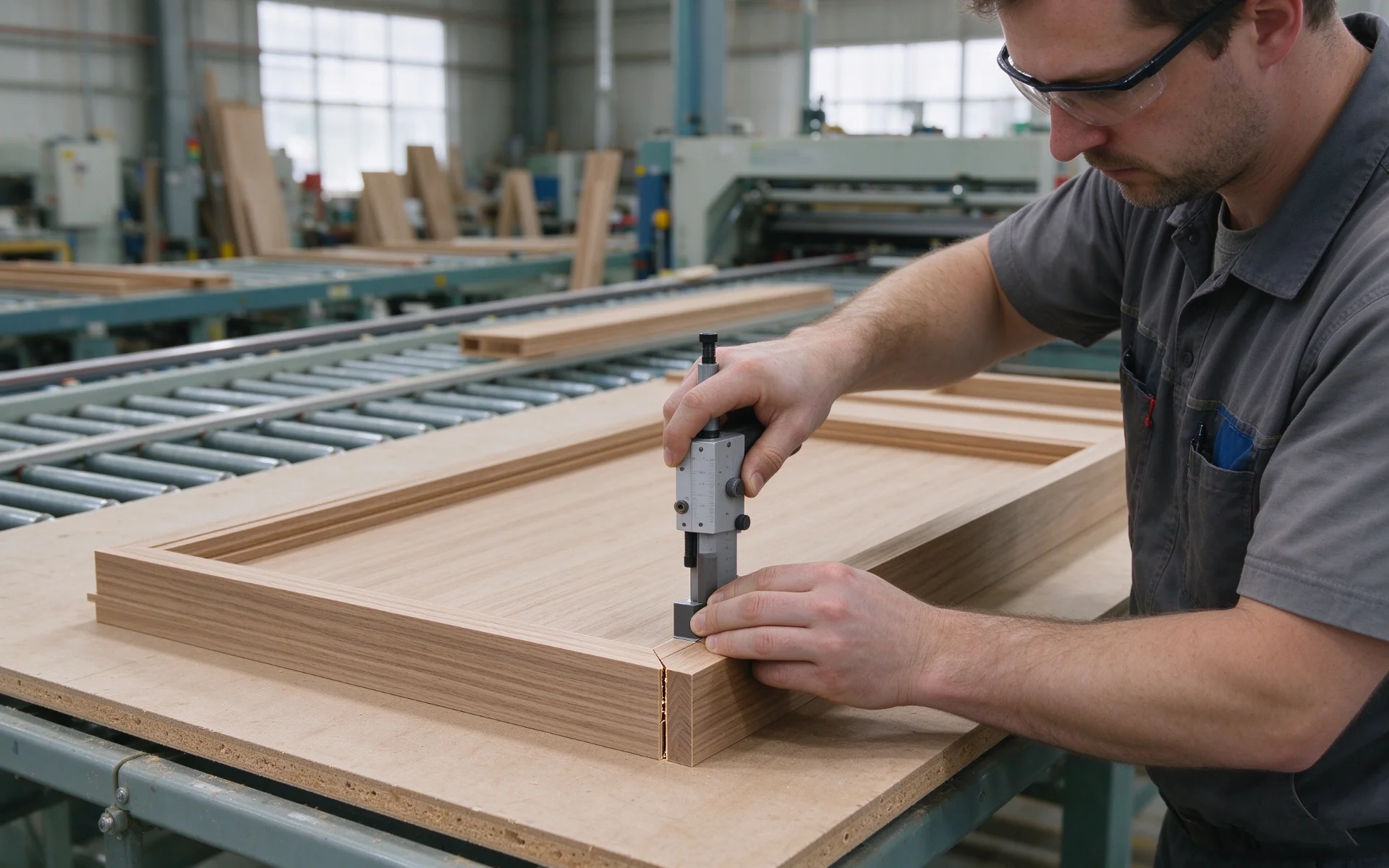
A single perfect sample is easy to make. Replicating that perfection 100,000 times is the real test of a manufacturer. For our clients, who are some of the largest retailers and importers in the world, consistency is not negotiable. A customer who buys a frame in New York should get the exact same quality as a customer who buys it in California. This is achieved through a rigorous, systematic approach to manufacturing and quality control.
The Importance of a Systematic Production Line
Our factory operates six dedicated production lines, each optimized for different frame types. For MDF frames, the process is systematic. It starts with a quality check of the raw MDF boards. Then, precision cutting machines ensure every single piece is dimensionally accurate to the millimeter. The next stage is finishing—either painting in a dust-free environment for a smooth coat or automated wrapping for a perfect wood-grain finish. The most critical step is assembly, where corners are joined. This is where many low-cost factories fail. Our process ensures tight, gap-free corners on every frame.
The Human Element in Quality Control
While machines provide precision, experienced people enforce quality. Each of our production lines is managed by a quality control professional with over five years of experience. They don't just check the final product; they inspect at every single stage. They look for subtle flaws that an automated system might miss: tiny bubbles in the wrap, slight color variations in the paint, or minute glue residue at the joints. This human expertise is your best insurance against inconsistency. For a major US wholesaler, we produce a simple black MDF frame. It looks basic, but the corners have to be perfect. Our QC manager can spot a 0.5mm gap from a meter away. That is the expertise that protects your brand.
How Do You Ensure Your Wooden Frames Meet Sustainability Standards?
Your products are headed for Europe or the US, but you're worried about new rules like the EUDR. A non-compliant shipment can be rejected at customs, costing you millions and ruining a product launch.
Work exclusively with manufacturers who hold FSC certification. This is the gold standard for verifying sustainable wood sourcing and is a powerful tool for demonstrating EUDR compliance. Also, ensure their materials are REACH compliant to avoid hazardous substances and ensure market access.
In today's market, especially for America and Europe, compliance is no longer optional. It's a requirement for market access. As a purchasing manager, navigating regulations like the EU Deforestation Regulation (EUDR) is a major part of your job. The risk of getting it wrong is immense. A shipment held at the port can wipe out your profit margin and damage your relationship with your retail partners. The key to mitigating this risk is to partner with a supplier who takes certification seriously.
What is FSC and Why Does It Matter?
The Forest Stewardship Council (FSC) is a global organization that certifies forests to ensure they are managed responsibly. For a product to be FSC-certified, every company in the supply chain—from the forest to the manufacturer to the trader—must have FSC chain-of-custody certification. When you source FSC-certified MDF frames from us, you get a verifiable guarantee that the wood fibers come from sustainable sources. This is not just good for the planet; it's a powerful marketing tool and a critical piece of due diligence for regulations like the EUDR.
Navigating EUDR and Other Regulations
The EUDR requires companies to prove that their products are not linked to deforestation. Having an FSC certification is one of the most effective ways to build your due diligence case. But sustainability isn't the only concern. Regulations like REACH in the EU restrict the use of certain chemicals. You need to ensure the paints, glues, and foils used in your frames are all REACH compliant. A reliable partner like ELIO will proactively provide all the necessary documentation for FSC, REACH, and social compliance audits like BSCI. We see it as our job to help you protect your business and ensure your products move smoothly from our factory to your customers' hands.
Conclusion
Choosing the right wooden frame comes down to selecting MDF for consistency, partnering with a manufacturer with robust QC, and demanding certifications like FSC for market compliance and sustainability.